Plogwarts, School of Picking and Jogging

Next classSun 29 Nov9 am flag-off
The Plogwarts Express: cleaning the Darjeeling toy train line

DarjeelingSukna

At 9 am on Sunday 29 November, all ten teams flag off at the same moment. We plog the toy train line for about three hours and reach our stations about noon, so all 66.5 km from Darjeeling to Sukna get cleaned at once. Register by Friday 27 November.

  • 66.5 km11 stations
  • 10Stretches
  • 250+Volunteers, free

On board this Sunday: PloggingMusicFoodGamesCertificates

Admit oneFree

Pick your station

Title sponsorIRCTCwith DHR

See the route

Timetable

How the day works

  1. 9 am: flag-off

    All ten teams set off together, each on its own stretch.

  2. Plog for about three hours

    Jog or walk the track and pick up litter as you go. Your team leader keeps an eye on safety.

  3. About noon: reach the stations

    Teams reach their stations around noon.

  4. Weigh and sort

    We audit what the team collected: weigh it, sort it, write it down.

  5. Food, games and music

    Rest at the station. Everyone who finishes their stretch gets a certificate directly from DHR.

This is not a relay. Nobody waits for a baton. All ten stretches run at the same time.

Pick your stretch

The route, station by station

The route has 11 stations and 10 stretches. Each team plogs one stretch. Pick the one that suits you when you sign up.

Route map of the Plogwarts Express, Darjeeling to Sukna A north-up sketch map of the Darjeeling Himalayan Railway line from Darjeeling at the top to Sukna at the bottom. Eleven stations sit on the line. Numbered dots mark the station at the top of each of the ten stretches, in order: Darjeeling, Ghoom, Sonada, Tung, Kurseong, Mahanadi, Gayabari, Tindharia, Chunbhati and Rongtong. A square marks Sukna, the end. A dashed line joins them. The Chunbhati and Sukna positions are approximate. The same stretches are listed below the map. 1Darjeeling 2Ghoom 3Sonada 4Tung 5Kurseong 6Mahanadi 7Gayabari 8Tindharia 9Chunbhati (approx.) 10Rongtong Sukna (approx.) N ↑
  1. Darjeeling to Ghoom

    Km 0 to 5.5, 5.5 km

    We start at Batasia and walk to both stations.

    Places open

    Directions to Batasia (opens Google Maps in a new tab)
  2. Ghoom to Sonada

    Km 5.5 to 14.6, 9.1 km

    We start at Rangbull and walk to both stations.

    Places open

    Directions to Rangbull (opens Google Maps in a new tab)
  3. Sonada to Tung

    Km 14.6 to 22.5, 7.9 km

    We start at Dilaram and walk to both stations.

    Places open

    Directions to Dilaram (opens Google Maps in a new tab)
  4. Tung to Kurseong

    Km 22.5 to 30.2, 7.7 km

    We start at Goethals and walk to both stations.

    Places open

    Directions to Goethals (opens Google Maps in a new tab)
  5. Kurseong to Mahanadi

    Km 30.2 to 38, 7.8 km

    We walk down, station to station.

    Places open

    Directions to Kurseong (opens Google Maps in a new tab)
  6. Mahanadi to Gayabari

    Km 38 to 44.1, 6.1 km

    Places open

    Directions to Mahanadi (opens Google Maps in a new tab)
  7. Gayabari to Tindharia

    Km 44.1 to 48.6, 4.5 km

    Places open

    Directions to Gayabari (opens Google Maps in a new tab)
  8. Tindharia to Chunbhati

    Km 48.6 to 53.6, 5 km

    Places open

    Directions to Tindharia (opens Google Maps in a new tab)
  9. Chunbhati to Rongtong

    Km 53.6 to 59.5, 5.9 km

    Places open

    Directions to Chunbhati (opens Google Maps in a new tab)
  10. Rongtong to Sukna

    Km 59.5 to 66.5, 7 km

    Places open

    Directions to Rongtong (opens Google Maps in a new tab)

The map is a sketch from station coordinates, not a survey. Chunbhati and the Sukna end point are approximate.

Sign up for a stretch

On the track

What you will do out there

Plog

Plogging is jogging or walking and picking up litter on the way. Go at your own pace. Stop when you see something. Bag it.

Waste audit

We weigh and sort what each team collects. It tells us what the litter on the line is made of and how much of it there is.

Hotspot mapping

When you pass a spot where litter keeps piling up, mark it. Put together, those marks make a map of the worst places on the line.

Safety

Each team has a team leader who looks after safety on the track. Listen to them and stay with your team.

After the plog

Food, games, a certificate

When you reach the station there is food, games and music. Everyone who finishes their stretch gets a certificate directly from the Darjeeling Himalayan Railway (DHR).

What to bring

  • Comfortable running shoes
  • Your own water bottle
  • Lots of energy
  • A cap or a warm layer
  • ID

We bring the bags.

The railway

A hill railway the world listed

The Darjeeling Himalayan Railway opened in 1881. UNESCO calls it “the first, and is still the most outstanding, example of a hill passenger railway”.

It is one of three lines that together make up the UNESCO World Heritage property Mountain Railways of India, along with the Nilgiri Mountain Railway and the Kalka Shimla Railway. It has been on the list since 1999.

88.48 km

of 2 ft (610 mm) gauge track from New Jalpaiguri to Darjeeling.

2,258 m

the height at which the line passes Ghoom.

1:31

the ruling gradient. The line climbs with six zigzag reverses and three loops.

Building ran from 1879 to 1881. The Batasia Loop came later, in 1919. Some of the B-class steam locomotives, built between 1889 and 1925, still run today.

Our 66.5 km stretch runs from Darjeeling down to Sukna. The full line goes on to New Jalpaiguri.

Why now

Why this line needs help now

The line is still running, and still fragile

Services run today: joy rides from Darjeeling to Ghoom every day, and through trains from New Jalpaiguri. But monsoon landslides keep cutting the line.

On 5 July 2024 a landslide stopped the through trains between New Jalpaiguri and Darjeeling. They didn't run again until 17 November, more than four months later (Outlook Traveller). In October 2025 heavy rain brought down more of the hillside and toy train services were suspended again (Business Today).

The town makes a lot of rubbish

Darjeeling produces about 35 tonnes of rubbish a day, according to Down To Earth (30 August 2024). The municipal dump is not segregated and has burned every winter for about 15 years. Plastic is choking rivers downstream.

Mongabay reported in 2019 that the town makes 30 to 35 tonnes a day, and that the amount doubles in peak tourist season. Tourists complained of a “dirty view” from the toy train.

Nobody has counted the track

We could not find a published count of litter along the DHR track itself. Our 29 November audit will be the first track-wide count. We will hand the hotspot map to DHR.

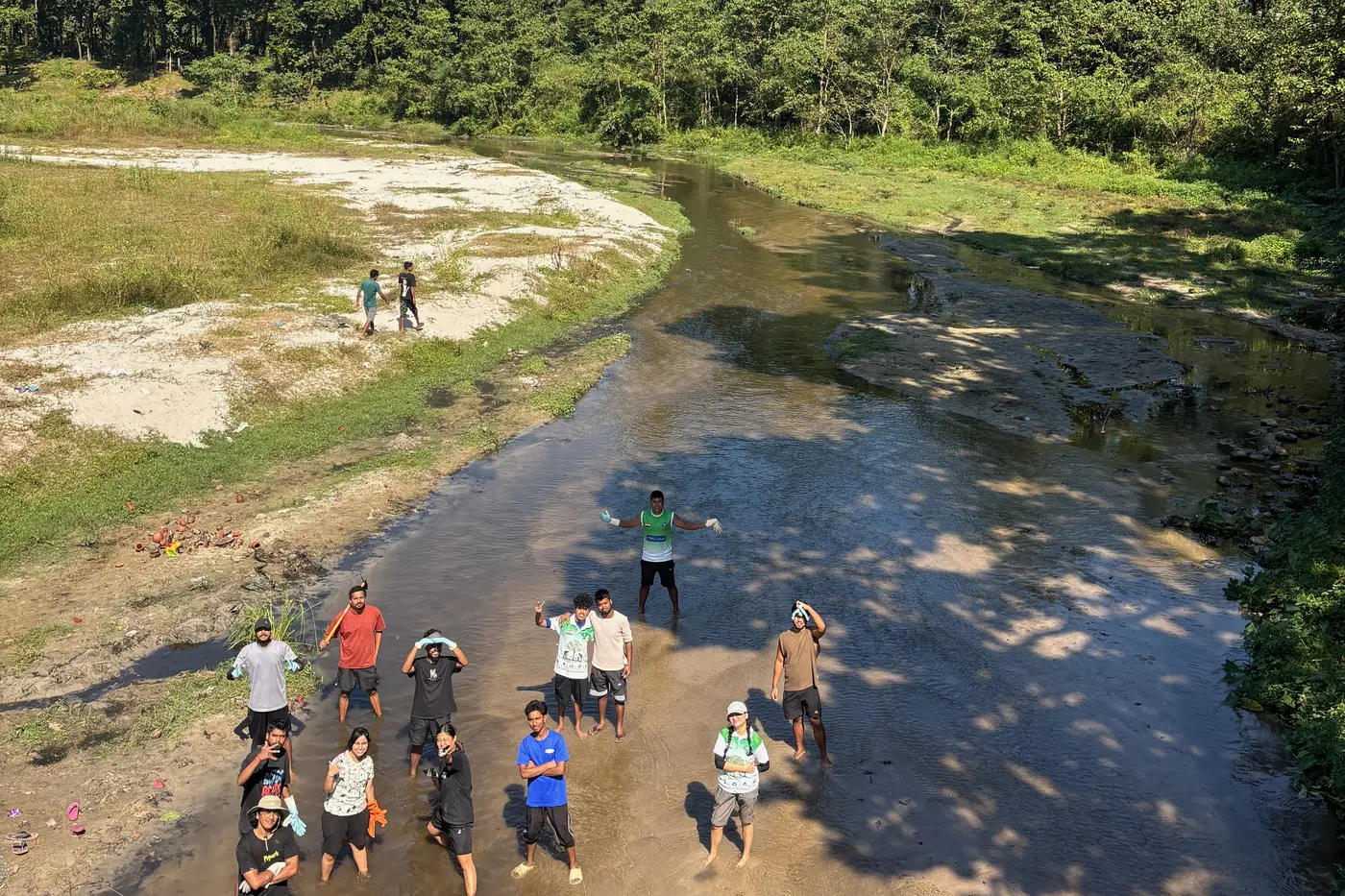
The Plogwarts crew spread out across a wide, shallow river bed, seen from above
Rivers are where plastic ends up. A Plogwarts crew on a river bed.

Blocked drains

Litter on tracks and slopes can block drains and culverts. On hillsides this prone to landslides, blocked drainage is a risk worth taking seriously.

Plastic in the jhoras

Rain washes plastic into the streams, the jhoras, and from there into the rivers.

Toxic smoke

Burning rubbish releases toxic smoke into the air people breathe.

A worse view

It spoils what visitors come here to see.

What this can change

What 250+ people can do in a day

First data

A track-wide waste count, so the problem has a size.

A hotspot map

The places where litter keeps piling up, handed to DHR.

A yearly habit

Once a year, every year, so the line doesn't quietly fill back up.

Pressure for bins

Evidence that stations need bins and regular collection.

And 250+ citizens taking care of a railway that belongs to all of us.

Questions

Before you sign up

Is the Plogwarts Express free?

Yes, it's free. We bring the bags. You bring your shoes and your own water bottle.

Who can join?

Anyone who wants to help and can comfortably walk or jog their stretch. You pick a stretch when you sign up. We are 250+ volunteers. Register by Friday 27 November. If you are unsure about a stretch, write to Saurav at saurav@myhumrahi.org.

How long is my stretch?

It depends on the station you pick. The shortest is Gayabari to Tindharia at 4.5 km. The longest is Ghoom to Sonada at 9.1 km. Plogging is a jog or a walk with stops to pick things up, so go at your own pace.

Is it a relay?

No. All ten teams flag off at the same moment, 9 am, each on its own stretch. Nobody hands anything over. We plog for about three hours and reach our stations about noon. Together the ten stretches cover the whole 66.5 km from Darjeeling to Sukna.

What should I bring?

Comfortable running shoes, your own water bottle and lots of energy. Also a cap or a warm layer, and ID. We bring the bags.

Will I get a certificate?

Yes. Everyone who finishes their stretch gets a certificate directly from the Darjeeling Himalayan Railway (DHR).

How do I get to my station?

Each stretch card on this page has a Directions link to its start point on Google Maps. After you sign up we also email you the reporting point.

What if it rains?

We will email you.

Partners

Who is behind it

Title sponsorIRCTC

The Plogwarts Express is run by Plogwarts and Humrahi Foundation with the Darjeeling Himalayan Railway (DHR). IRCTC is the title sponsor. Questions? Write to Saurav at saurav@myhumrahi.org or call +91 78721 06252.

Sources

Where the facts come from

Station coordinates are approximate. Kilometre marks are from the organisers.